Français  Nederlands  Deutsch

Service for the fight against poverty, insecurity, and social exclusion

copyright wauter de tuinkabouter - Jan Bakker - goodsardine.clean - Johny hanging head down from the tree - maav
 

graphic element Welcome to our web site graphic element

A public service for combating poverty

Its background

The General Report on Poverty, which was commissioned by the government at the time, was published in 1994. This report was the result of two years of work and brought together organizations in which the poorest had their say along with local public welfare agencies, social workers from the social assistance and special juvenile assistance sectors, teachers, doctors, employers and labor unions, and so on.

In the General Report on Poverty, it was asked that a structural tool be developed for fighting poverty. In 1998, a "Partnership Agreement between the Federal State, the Communities, and the Regions on the Continuation of the Policy on Poverty" was signed. This agreement provided for, among other things, the formation of the Service for the Fight against Poverty, Insecurity, and Social Exclusion. This Service was established in July 1999.

Its own tasks

The Partnership Agreement concerning the continuation of the policy on poverty in Belgium determines the tasks of the Service for the Fight against Poverty, Insecurity, and Social Exclusion:
 
bullet

to inventory, systematize, and analyze information about insecurity, poverty, social exclusion, and access to rights on the basis of established indicators;

bullet

to make concrete recommendations and proposals in order to improve policy and schemes for the prevention of insecurity, for the fight against poverty, and for the integration of people into the society;

bullet

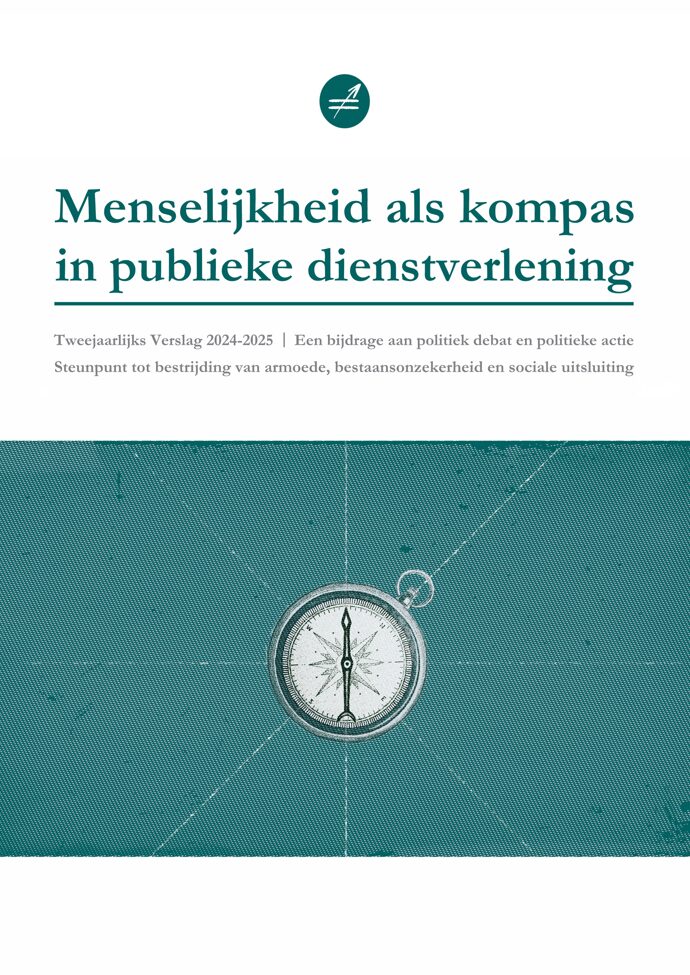
to prepare a report at least every two years;

bullet

to issue, at the request of one of the signatory parties, the Interministerial Social Integration Conference, or on its own initiative, recommendations or to prepare interim reports on any issue that is related to an area that belongs to its tasks;

bullet

to organize structural consultation with the poorest people.
 

Organizing structural consultation with people in poverty

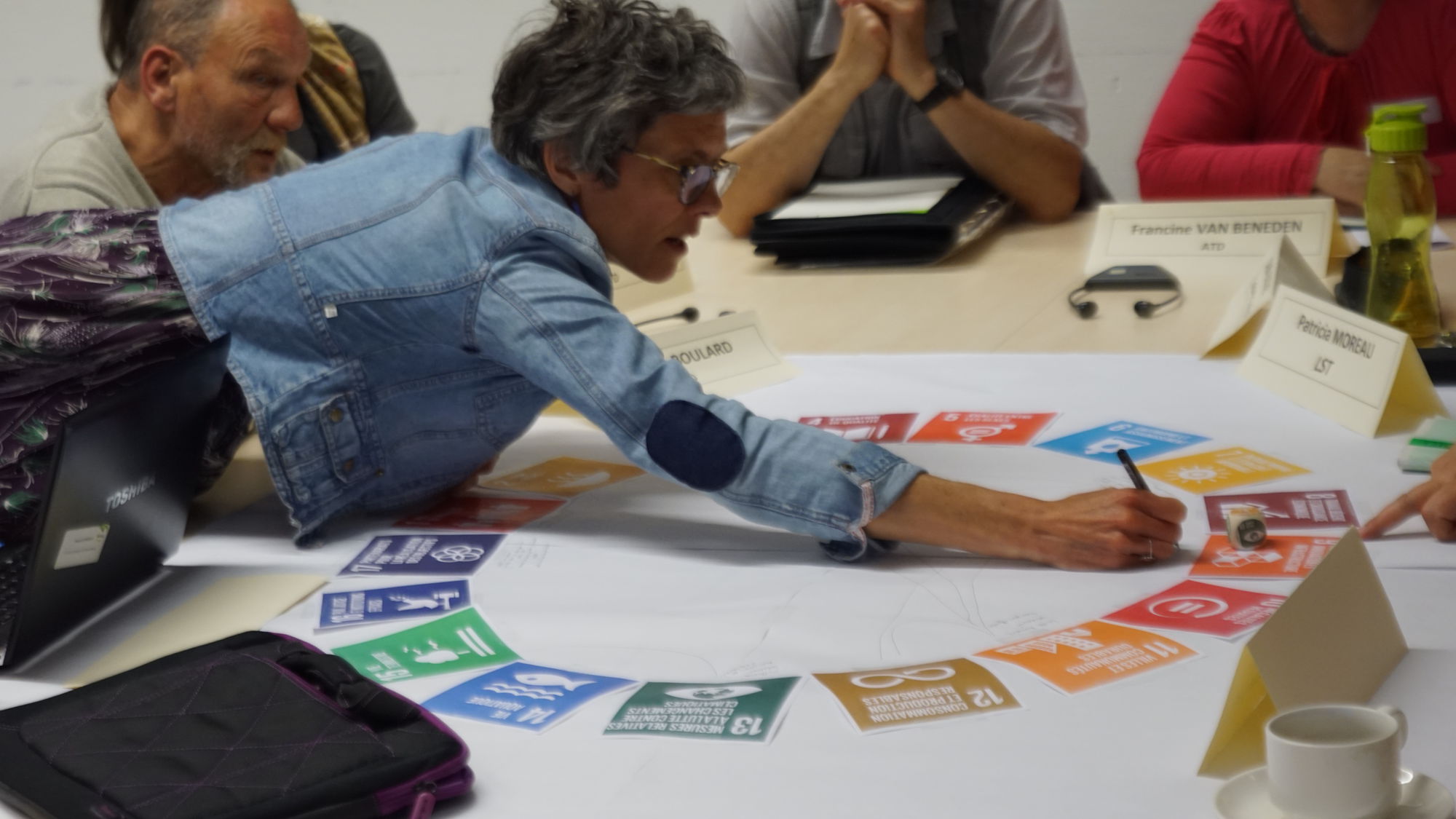
The Partnership Agreement structurally anchors the consultation between the authorities and the associations in which the poor have a say and assigns the Service the task of organizing this consultation. To do this, it uses the dialogue method, which was used in preparing the General Report on Poverty. In this participation method, the object is to intersect the experiential knowledge of people who have themselves lived in poverty with the action knowledge of the social assistance groups, the administrations, the middle field, politics etc and with the academic knowledge of scientists. The involvement of people in poverty via the organizations that represent them not only encourages their emancipation but also guarantees more efficient policy in the fight against poverty and for a more cohesive and democratic society. The Collective of Partner Associations of the General Report on Poverty is one of the most important and privileged partners of the Service. It consists of the associations that collaborated on the General Report on Poverty and other that joined later.

Prepare a biennial report on poverty

Every two years, the Service must prepare a report on insecurity, poverty, and social exclusion and unequal access to rights. The report is compiled in conjunction with the associations in which the poor have a say and other partners. With the application of the dialogue method, this Report differs from many others. The biennial reports are intended to be an aid in political decision-making. The Partnership Agreement provides the necessary follow-up procedure for this: The Interministerial Social Integration Conference, formed as an instrument to achieve more coherence in the policy regarding poverty and social exclusion, must transmit this report to the various political and socio-economic authorities. The first Biennial Report, entitled "In dialogue, six years after the General Report on Poverty" appeared in June 2001. Two major focus points emerge from this report:
 
bullet

a general, rather than a selective policy;

bullet

a policy that gives each person the opportunity to exercise his or her citizenship.

In addition to these two areas for political choices: three principles for good policy were put forward:
 
bullet

more knowledge regarding the life situation of people in poverty;

bullet

more dialogue with people in poverty via their associations;

bullet

more coherence in the policy regarding poverty and social exclusion.


More information on the Service is available in Dutch and French. Please have a look.


Centre for equal opportunities and opposition to racism


Koningsstraat 138, rue Royale, 1000 Brussels Phone: +32 (0)2 212.31.66 Fax: +32 (0)2 212.30.30 E-mail: armoedebestrijding@cntr.be Last update: 26-01-2010


This work is licensed under a Creative Commons Attribution-NonCommercial-NoDerivs 2.0 License.